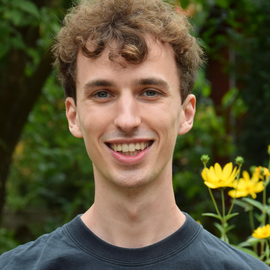
Lennart Wachowiak
Postdoctoral Researcher at University of Oxford | Technical AI Safety Fellow at Cambridge ERA:AI
University of Oxford
Biography
I am a postdoctoral researcher at the University of Oxford working on human–AI interaction and decision-making. Earlier this year, I was a Cambridge ERA:AI research fellow.
I received my PhD from the CDT in Safe and Trusted AI at King’s College London and Imperial College London. During my PhD, I worked as a student researcher at Google DeepMind, where I was part of the Gemini Robotics team.
Decision-Making. My current research focuses on how AI systems can help people make better decisions, especially in settings where other AIs may try to manipulate users into harmful choices. In particular, I study how an advisory AI can detect and counter manipulative or adversarial influence.
Explainability. During my PhD, I investigated how robots can learn to proactively explain their decisions and assist people in collaborative scenarios. I trained machine learning models to predict when explanations are needed and what they should be about by interpreting the user’s non-verbal behaviour and contextual task cues.
Cognitive Linguistics. I love interdisciplinary work, learning about different perspectives, and combining them to get a rich understanding of a phenomenon. Beyond my work in human–AI interaction, I study conceptual metaphors and image schemas in text corpora using tools from natural language processing and theories from cognitive linguistics.
Download my CV.
-
Postdoctoral Researcher, 2026–Present
University of Oxford
-
Technical AI Safety Fellow, 2026
Cambridge ERA:AI
-
Student Researcher, 2024–2025
Google DeepMind
-
PhD in Safe and Trusted AI, 2021–2026
King's College London, Imperial College London
-
MSc in Cognitive Science, 2018–2021
Joint Degree with University of Vienna, University of Ljubljana, Comenius University Bratislava, Eötvös Loránd University Budapest
-
BSc in Computer Science, 2014–2017
University of Paderborn
Research Areas
Explore the research areas I have investigated.